
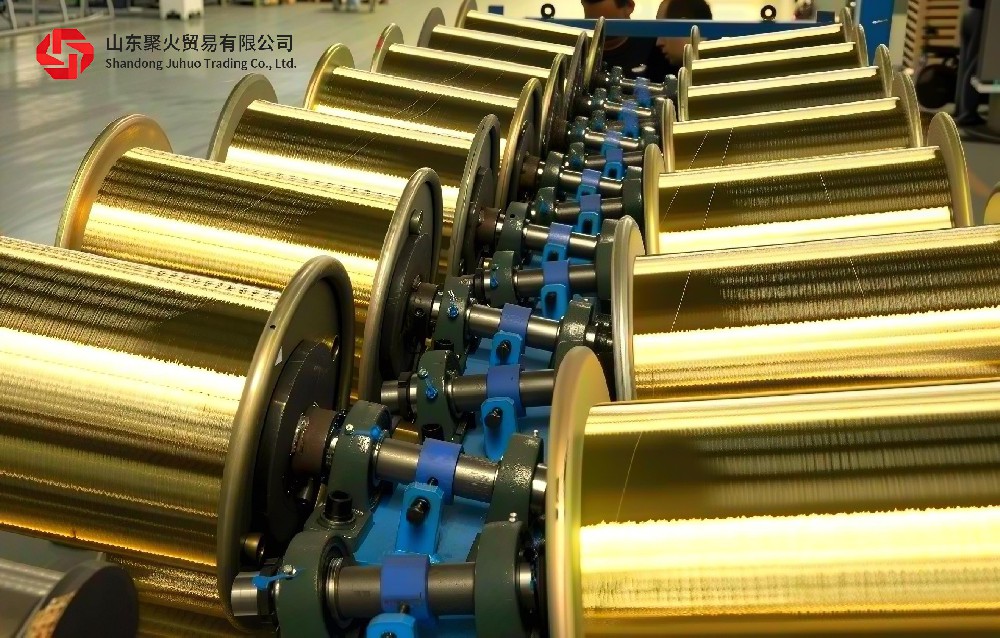
Copper-coated steel fibers possess the high strength and high toughness of the steel matrix, as well as the excellent electrical conductivity, corrosion resistance, and electromagnetic shielding properties of the copper coating. They are key functional materials in high-performance concrete reinforcement, special engineering protection, new energy infrastructure, and electromagnetic compatibility fields. In 2026, driven by the dual carbon policy, infrastructure upgrading, technological iteration, and application expansion, the industry entered a new stage of high-quality development characterized by stable growth in scale, accelerated structural upgrading, and continuous improvement in concentration. It exhibited core features such as high-tech, green production, application-oriented, and competitive leadership.
I. Market Size: Steady Growth, Leading in High-End Segments
The market size of copper-coated steel fibers in China is expected to reach 2.091 billion yuan in 2026, with a year-on-year growth of 11.2%; the total output is expected to be 20,700 tons, with a year-on-year growth of 11.3%, which is higher than the average growth rate of the engineering fibers industry, making it the most certain growth segment in the special reinforcing materials category.
From the product structure perspective, the trend of high-end substitution is significant: the output of ultra-fine copper-coated fibers (diameter ≤ 0.2mm) is expected to reach 5,310 tons, with a year-on-year growth of 12.5%; the output of stainless steel copper-coated fibers is 3,620 tons, with a year-on-year growth of 13.8%; the growth rate of ordinary carbon steel-based copper-coated fibers slows down to 9.8%, and the industry is accelerating its migration from general types to high-performance and functional products.
At the global market level, the global market size of copper-coated steel fibers was approximately 450 million US dollars in 2024, and is expected to steadily expand at a compound annual growth rate of **7.3%** from 2026 to 2033. The core markets are China, the United States, and Europe, among which the Chinese market contributes over 50% of the global increment, making it the main engine of industry growth.
II. Technological Innovation: Precision Enhancement + Green and Low-Carbon, Accelerated Process Iteration
(1) Core Process Breakthroughs
Coating Precision Upgrade: Leading enterprises have achieved a copper layer thickness tolerance of ±0.3 μm (industry average ±0.8 μm), with a coating adhesion force of 144 MPa, an 80% increase compared to the industry average, solving the problems of traditional coating detachment and poor uniformity.
High-Strength Breakthrough: Ultra-high-performance copper steel fibers (UHPC) have an tensile strength exceeding 3000 MPa, with a elongation after fracture of ≥3.5%, suitable for extreme conditions such as large-span bridges, nuclear safety shells, and high-altitude and cold tunnels.
Functional Customization: For electromagnetic shielding scenarios, high-conductivity products have been developed, with a conductivity rate of 95% of pure copper, a 60-80 dB shielding efficiency at 1 GHz, meeting the construction standards for 5G base stations and data centers; for anti-corrosion scenarios, after densifying the copper layer, the neutral salt spray test endurance exceeds 1000 hours, and the anti-corrosion ability is 3-5 times higher than that of ordinary steel fibers.
(2) Green and Low-Carbon Transformation
The industry is comprehensively promoting environmental protection process renovations, replacing traditional high-pollution acid washing and phosphating processes:
Cyanide-free electroplating and low-temperature rapid curing technology are widely adopted, reducing the production cycle by 40% and energy consumption by 25%;
The copper layer recovery process has been upgraded, with leading enterprises achieving a copper recovery rate of over 90%, reducing solid waste and wastewater emissions by 60%;
The promotion of short-process steel smelting - wire drawing - electroplating integrated production lines has lowered the unit manufacturing cost by 11.4% compared to the industry average, with a carbon footprint in the entire life cycle lower than the industry benchmark by 15%, meeting the requirements of green building materials certification.
(3) Digital Enabling
The penetration rate of intelligent production lines has increased to 79%, through digital twins and real-time quality monitoring, the product first-pass qualification rate has reached 99.62%, with leading enterprises stabilizing at over 99.7%, and the quality gap between small and medium-sized manufacturers and leading enterprises has become a core entry barrier.
III. Application Expansion: Infrastructure Support + Emerging Growth, Diversified Scenarios
(1) Traditional Infrastructure: Dominant Position, Standard Upgrade
Transportation Infrastructure (bridges, tunnels, high-speed rail) remains the largest application area, accounting for 41.6% in 2025 and remaining stable in 2026. With the implementation of the "14th Five-Year Plan for the Construction Industry", the mandatory application ratio of fiber-reinforced concrete has increased to 35%. The demand for copper-plated steel fibers in municipal bridge reinforcement, underground pipe galleries, and water conservancy projects has steadily grown. The penetration rate of high-altitude and cold-region railway tunnels has increased from 29.5% to 42.1%.
(2) Emerging Fields: High Growth, New Engine
New Energy Infrastructure: Demand for photovoltaic support bases, anti-static floors for energy storage stations, and foundations for wind turbine towers has exploded. The purchase volume of special copper-plated steel fibers for energy storage stations increased by 31.2% in 2025, and the demand for anti-static floors in semiconductor clean rooms increased by 42.6%, becoming the first growth curve in the industry.
Special Engineering: Penetration rates of nuclear power safety shells, military protection, and marine engineering have rapidly increased. The penetration rate in the nuclear power field has jumped from 19.3% to 35.7%, with a year-on-year growth of 84.9%. There is a strong demand for high-end customized products.
Electromagnetic Shielding: Demand for 5G base stations, data centers, and anti-static structures for rail transit has expanded. Copper-plated steel fibers have replaced traditional shielding materials, reducing costs by 30% and improving performance by 50%.
(3) Export Markets: High-end Global Expansion, Significant Premium
In 2025, China's export volume of copper-plated steel fibers reached 142 million yuan, increasing by 19.8%. The main export destinations include emerging markets such as Vietnam, the United Arab Emirates, and Poland. The export average price was 23.2% higher than domestic sales. The international recognition of domestic high-end products continued to increase, and the export growth rate was expected to exceed 20% in 2026.